UPM01/02, developed by Upbeat Technology, is a low power MEMS vibration sensor. Designed for applications requiring high-quality sound capture with minimal power consumption, it serves as an optimal solution for next-generation voice interaction products.
.png)
.png)
Unlike traditional air-conduction microphones, UPM01/02 leverages bone conduction technology to capture sound directly from the user’s skull. This approach significantly improves voice clarity, ensuring accurate capture even in noisy environments. Its innovative design makes it ideal for voice assistants, wearable devices, and communication products.
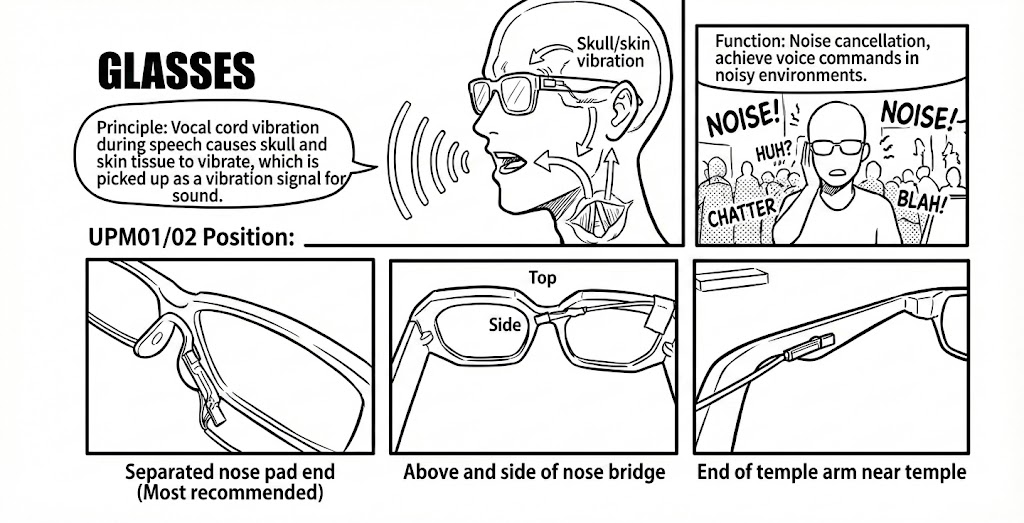
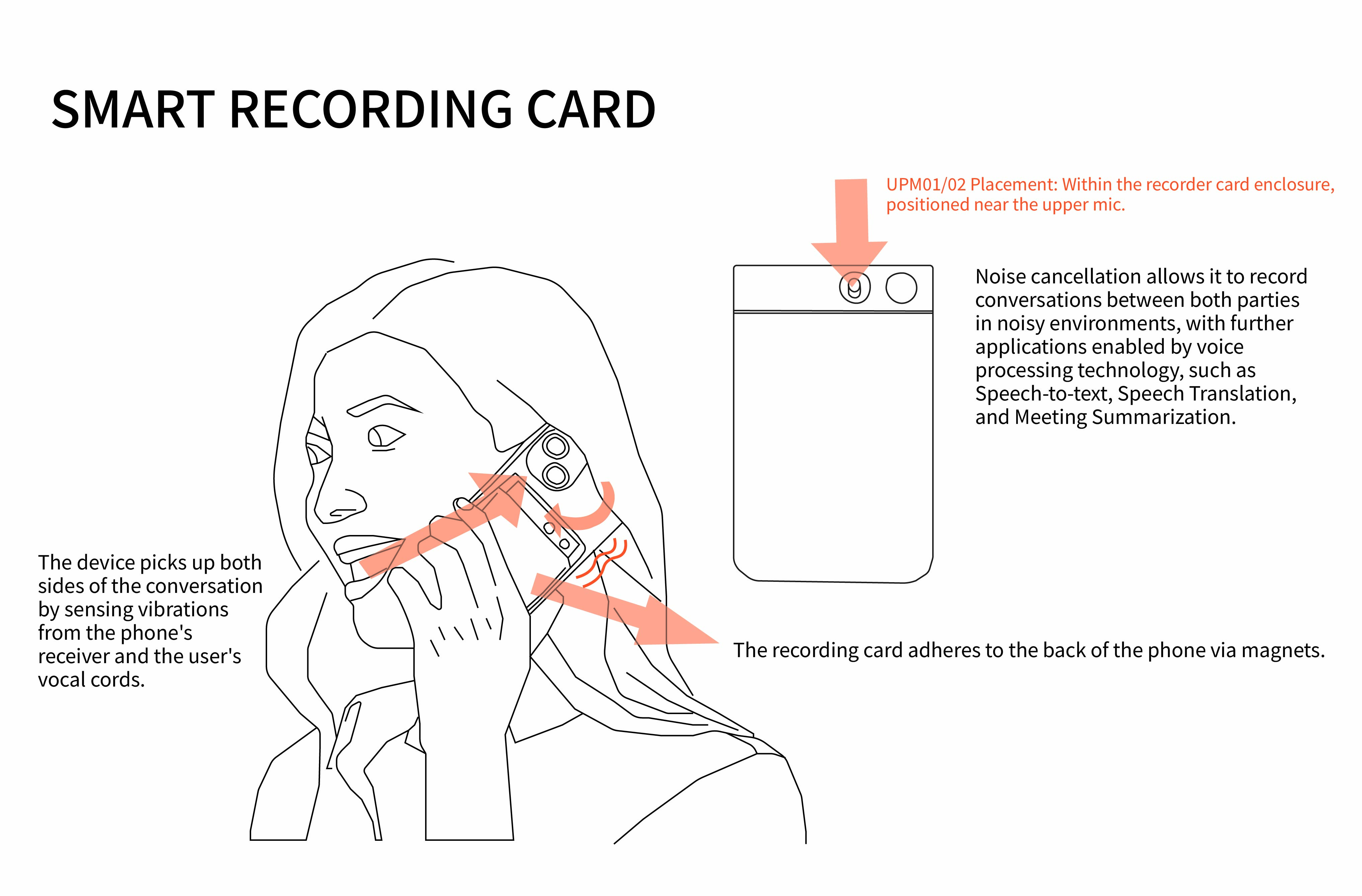
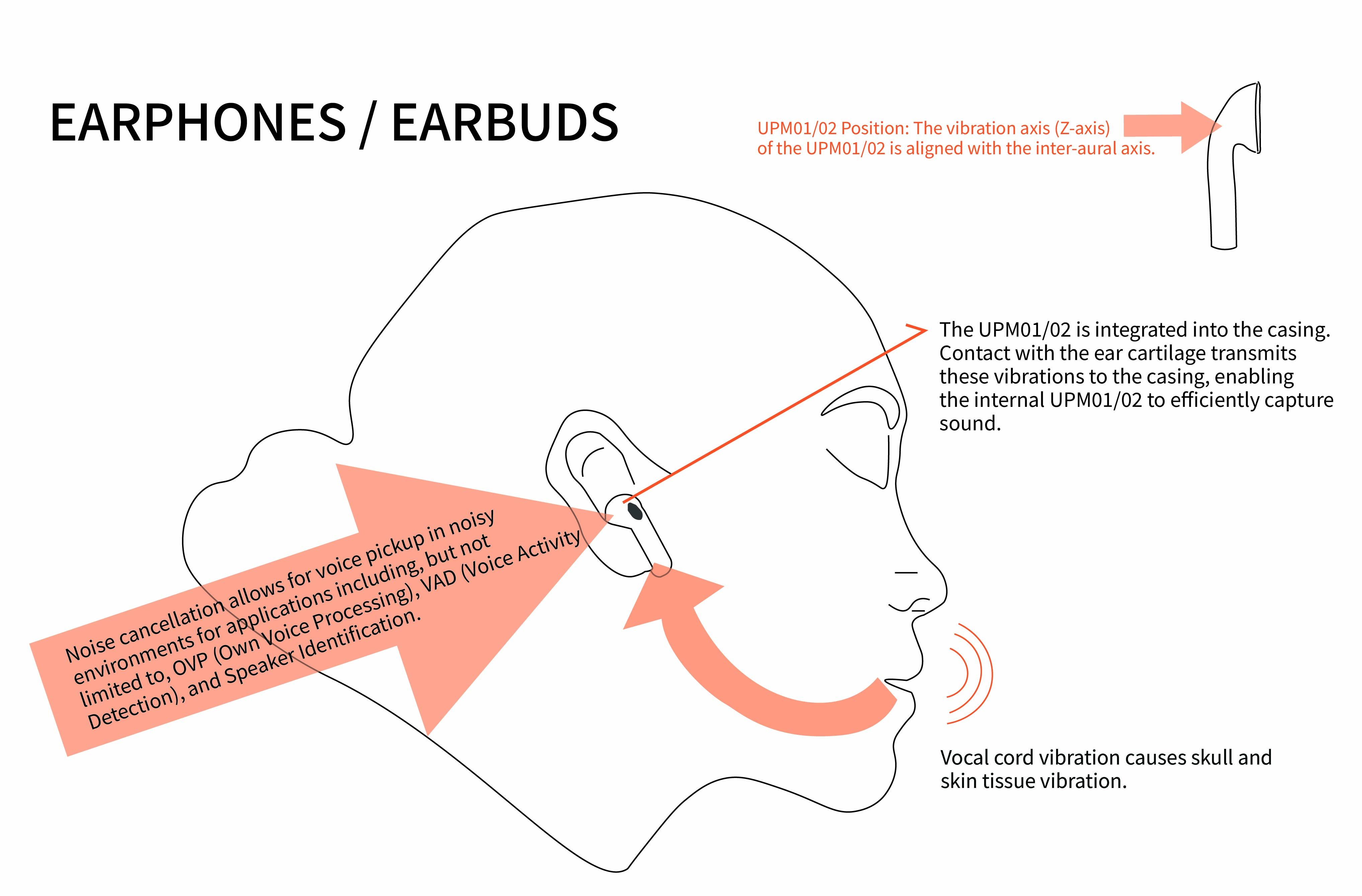
UPM01 extends the frequency response of conventional MEMS vibration sensors from 5 Hz to 11.3 kHz and delivers and SNR of 60 dB(A), enabling more detailed and accurate sound capture across a broader frequency spectrum. UPM02 offers a frequency response range from 5 Hz to 5.4 kHz, while achieving and exceptionally high signal-to-noise ratio of up to 68 dB(A) to ensure clear, stable, and reliable signal quality. In addition, UPM02 provides excellent noise immunity without requiring any additional packaging or acoustic porting, avoiding processes that could otherwise compromise device from factor and performance consistency.
Designed with its low power consumption, both sensors can operate for extended periods on a single battery charge, providing outstanding energy efficiency. This makes them ideal for mobile devices, wearables, and other battery-powered applications where performance and power efficiency are equally critical.
With its compact and robust form factor, UPM01/02 integrates easily into a wide range of product designs. It is compatible with most digital signal processing (DSP) architectures, allowing developers to implement voice capture and processing capabilities efficiently and accelerate time-to-market.
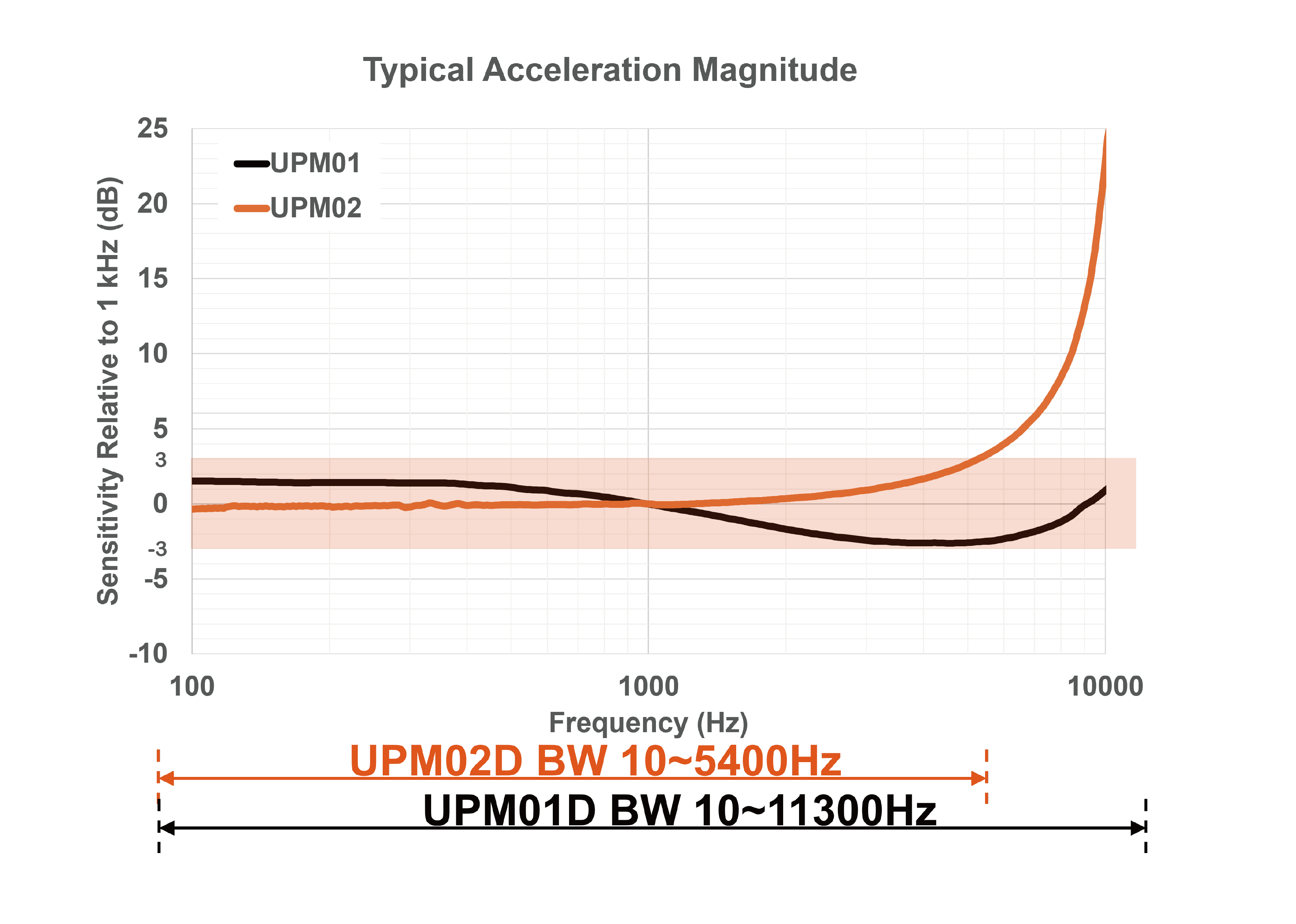
* The above specifications apply to the digital versions (UPM01D/UPM02D). Analog versions (UPM01A/UPM02A) are also offered.
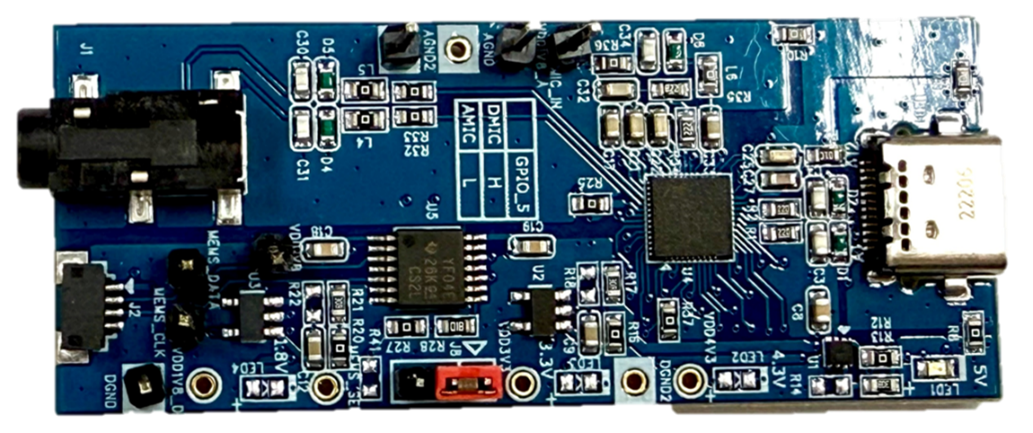
In Vibo6542, the digital interface converts PDM (Pulse Density Modulation) signals into PCM (Pulse Code Modulation) signals, which are then transmitted to the host via USB. Meanwhile, the analog interface processes analog signals through an ADC (Analog-to-Digital Converter), converting them into PCM signals before transmitting them to the host via USB.
This dual-interface architecture ensures compatibility with a wide range of audio sources, delivering efficient and reliable digital audio output for diverse application scenarios.

